


Concrete Canvas: Revolutionizing Construction with Rapid-Deploy Concrete
Abstract
Concrete Canvas (CC) represents a transformative innovation in construction materials and geosynthetics. It is a flexible, cement-impregnated fabric that hardens upon hydration to form a thin, durable, waterproof, and fire-resistant concrete layer. This article explores its composition, mechanism, key properties, diverse applications, installation process, and the significant advantages it offers over conventional concrete construction.
1. Introduction: A Paradigm Shift in Concrete Application
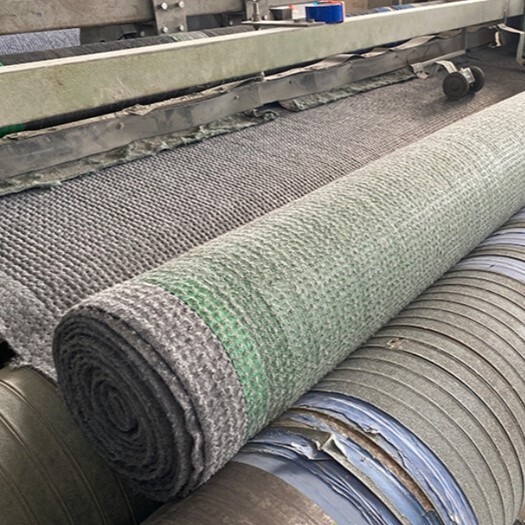
Traditional concrete placement is a labor, time, and resource-intensive process involving mixing, forming, pouring, and curing. Concrete Canvas (CC) disrupts this paradigm by delivering concrete as a flexible, roll-out geosynthetic composite. Essentially, it is "concrete on a roll," enabling rapid deployment in challenging environments and applications where conventional methods are impractical or prohibitively expensive.
2. Material Composition and Structure
Concrete Canvas is a three-dimensional composite material, typically consisting of:
Top Layer: A woven polyethylene (PE) or polyvinyl chloride (PVC) geotextile that provides a waterproof and UV-resistant membrane.
Core Matrix: A non-woven, needle-punched 3D fabric matrix, fully impregnated with a specially formulated, dry powdered cement blend (often containing additives for rapid strength gain and flexibility).
Bottom Layer: A non-woven absorbent fleece (often polypropylene) that facilitates hydration. This layer is in direct contact with the substrate during installation.
This layered structure is contained within a water-soluble packaging for ease of handling and protection prior to use.
3. Mechanism: From Fabric to Concrete
The operational principle is elegantly simple:
Deployment: The dry, flexible roll is transported to the site, cut to size, and positioned over the prepared substrate.
Hydration: Water is applied, typically by spraying. The water penetrates through the top waterproof layer via engineered perforations, or more commonly, hydrates the material from the sides and bottom via the absorbent fleece layer. The fleece efficiently wicks water into the cement-rich core.
Hydration and Curing: The water activates the dry cement particles. The material becomes initially pliable, allowing it to conform closely to complex shapes (e.g., ditches, slopes). It then begins to set rapidly.
Hardening: Within 24 hours, it cures to achieve over 80% of its final strength, forming a monolithic, seamless, and durable concrete shell. No mixing, pouring, or formwork is required.
4. Key Engineering Properties
Rapid Strength Gain: Achieves high early strength (e.g., >20 MPa compressive strength in 28 days).
Low Permeability: Forms a highly impermeable layer (equivalent to a Class II concrete surface), ideal for lining and containment.
Durability: Excellent resistance to weathering, chemical attack (dependent on cement type), and ultraviolet degradation.
Fire Resistance: Classified as a non-combustible, A2 fire-rated material.
Flexibility (Pre-hydration): Can be easily cut with hand tools and draped over complex geometries.
5. Primary Applications
Concrete Canvas's unique properties make it ideal for:
Erosion Control & Slope Protection: Rapid lining of drainage ditches, channels, embankments, and shorelines to prevent scour.
Emergency & Military Infrastructure: Quick establishment of shelter foundations, blast protection walls, landing pads, and temporary roadways in disaster relief or forward operating bases.
Hydraulic Works: Lining for spillways, irrigation canals, pond berms, and secondary containment bunds.
Mining & Industrial: Cost-effective lining for pipeline protection, ventilation stoppings, and surface stabilization on tailings facilities.
Civil Infrastructure: Culvert protection, tunnel lining repair, and sub-base layer stabilization beneath roads or railways.
6. Installation Process: Simplified Construction
Site Preparation: Level and compact the substrate. Remove sharp protrusions.
Material Placement: Unroll the CC sheet over the area. Overlap adjacent sheets (typically 100-150mm). Cut to fit using utility knives.
Hydration: Thoroughly soak the material with water using sprayers or hoses. The bottom fleece will darken as it hydrates.
Contouring: Gently mold the material into the desired shape before initial set begins (within ~1-2 hours).
Curing: The material will set hard within 12-24 hours. Avoid traffic or loading during this period.
7. Advantages Over Conventional Concrete
Speed of Installation: Up to 10 times faster than traditional methods; no curing delay.
Logistical Efficiency: Dramatically reduced volume and weight compared to raw materials for equivalent concrete volume. 100㎡ of 10mm-thick CC can be transported in a single pallet.
Ease of Use: Requires minimal skilled labor and no heavy mixing/pouring equipment.
Versatility: Conforms to irregular surfaces without complex formwork.
Reduced Environmental Impact: Lower water usage, less waste, and a smaller carbon footprint due to efficient material use and transport.
Consistent Quality: Factory-controlled cement content and mixing ensure uniform, high-quality output, free from on-site mixing errors.
8. Limitations and Considerations
Thickness Limitation: Currently available in set thicknesses (e.g., 5mm, 8mm, 10mm, 13mm), making it unsuitable for major structural load-bearing elements like deep foundations or thick slabs.
Surface Finish: The texture is that of a fabric-reinforced concrete, which may not be suitable for architectural finishes without treatment.
Initial Cost: Higher material cost per cubic meter than standard wet-mix concrete, though total installed cost is often lower due to labor and time savings.
Design Life: While durable, its long-term performance (>50 years) in all environments is still being fully validated, unlike the proven history of conventional concrete.
9. Conclusion and Future Outlook
Concrete Canvas is a premier example of disruptive innovation in construction technology. It successfully bridges the gap between the high performance of concrete and the practical ease of geosynthetic installation. Its core value lies in enabling rapid, simple, and robust construction in remote, difficult, or time-critical scenarios.
Future developments are likely to focus on broadening the product range with greater thickness options, enhanced chemical-resistant formulations, and integration with smart technologies (e.g., sensors for structural health monitoring). As the industry continues to prioritize speed, sustainability, and resilience, Concrete Canvas is poised to become an increasingly standard solution for a wide array of geotechnical, environmental, and infrastructure challenges, redefining how and where concrete can be effectively utilized.
Inquiry about this product
Related Recommendations
If there is no accurate search result, please contact us and we will respond within 24 hours.