



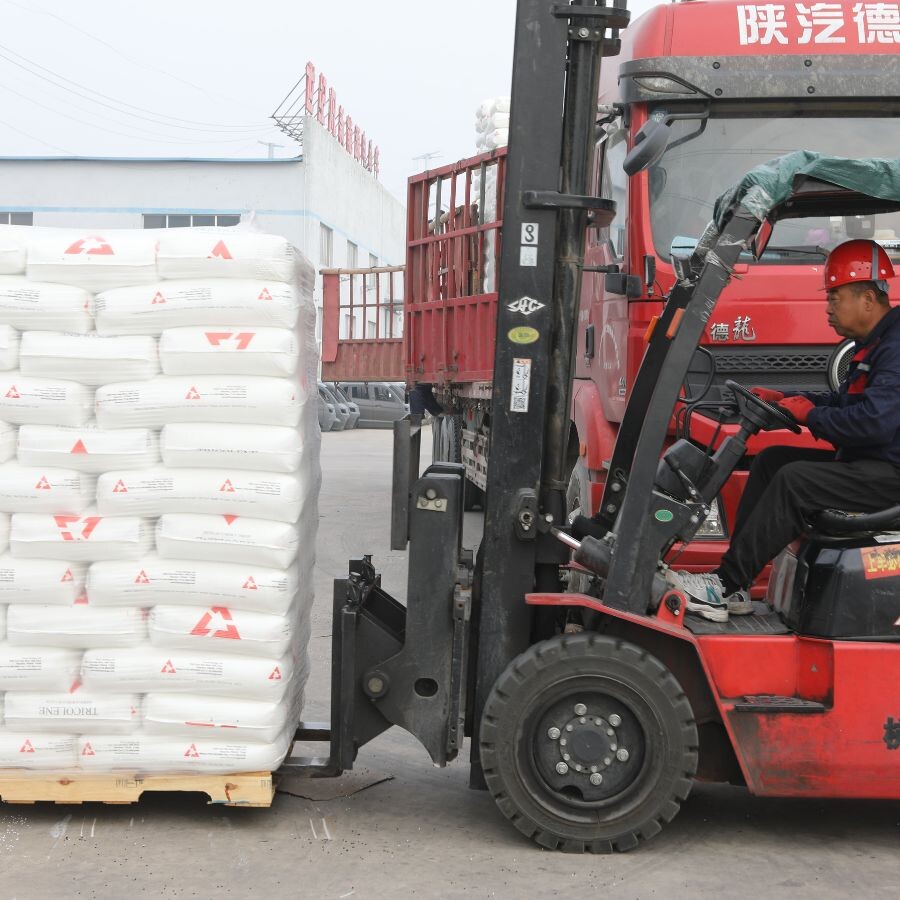
Geotextiles: The Versatile Engine of Modern Geotechnical Engineering
Abstract:
Geotextiles are permeable polymeric fabrics engineered for use within soil structures. As a fundamental category of geosynthetics, they fulfill critical functions—separation, filtration, drainage, reinforcement, and protection—enhancing the performance, longevity, and sustainability of civil and environmental projects. This article details their types, functions, applications, and key selection principles.
1. Introduction
Geotextiles are flexible, textile-like materials manufactured from synthetic polymers, primarily polypropylene or polyester. Unlike impermeable geomembranes, their defining characteristic is permeability, allowing water to pass through while controlling soil particle movement. First developed in the 1960s, they have since become indispensable tools for solving complex geotechnical challenges in a cost-effective manner.
2. Types and Manufacturing Processes
Geotextiles are classified primarily by their manufacturing method, which dictates their structure and mechanical properties.
Woven Geotextiles: Produced by interlacing two sets of yarns (warp and weft) on a loom. They typically exhibit high tensile strength and low elongation, making them ideal for reinforcement applications. Common weaves include slit-film (made from flat tapes) and monofilament/multifilament weaves, the latter offering better permeability.
Non-Woven Geotextiles: Manufactured by bonding synthetic fibers together through mechanical (needle-punching), thermal, or chemical means. Needle-punched non-wovens are the most common. They are relatively thick and porous, excelling in separation, filtration, and drainage roles. They have moderate tensile strength but high elongation.
Knitted Geotextiles: Less common, produced by interlooping yarns. They offer a combination of flexibility and strength.
3. Primary Functions and Mechanisms
Geotextiles perform five core engineered functions, often simultaneously:
Separation: Placed between two dissimilar soil layers (e.g., aggregate base and soft subgrade), a geotextile prevents their intermixing. This maintains the integrity and load-bearing capacity of the upper layer, reducing aggregate loss and subgrade contamination.
Filtration: Placed adjacent to soil, a geotextile allows water to flow through while preventing the uncontrolled migration of fine soil particles. This is crucial in drainage systems, retaining walls, and coastal protection, where it prevents soil erosion while maintaining system permeability.
Drainage: As a planar conduit in the soil mass, a geotextile (often in conjunction with a core) collects and transmits water or gases within its plane, relieving pore pressure and improving stability.
Reinforcement: Through tensile resistance, a geotextile introduces a stabilizing force into a soil mass. It distributes loads, increases the bearing capacity of soft soils, and enables the construction of steepened slopes and mechanically stabilized earth (MSE) retaining walls.
Protection: Acting as a cushion, a geotextile protects sensitive geosynthetics (like geomembranes) from puncture or abrasion from sharp aggregate or irregular subgrades.
4. Key Applications
Transportation Infrastructure:
Roads and Railways: Used for separation and reinforcement between subgrade and ballast/base course, reducing rutting and extending maintenance cycles.
Embankments on Soft Soils: Provides basal reinforcement to distribute loads and prevent rotational failure.
Drainage Systems:
Landfill Leachate Collection: Wraps perforated pipes to filter out fines, preventing clogging.
Behind Retaining Walls: Acts as a filter-drain to relieve hydrostatic pressure.
Sport Fields and Green Roofs: Facilitates subsurface drainage.
Erosion and Sediment Control:
Silt Fences: Temporary sediment barriers on construction sites.
Riprap and Revetment Protection: Placed beneath stone armor to prevent soil wash-out while allowing water passage.
Environmental and Containment:
Landfill Liners and Caps: Serves as a protective layer for geomembranes and as a filtering/venting layer.
Stormwater Management Ponds: Used in filtration structures.
5. Material Properties and Selection Criteria
Selecting the appropriate geotextile requires analyzing site-specific conditions against key properties:
Physical Properties: Thickness, mass per unit area, and specific gravity.
Mechanical Properties:
Tensile Strength and Modulus: Critical for reinforcement.
Puncture and Tear Resistance: Important for installation survivability and protection.
Frictional Characteristics (Soil-Geotextile Interaction): Essential for reinforcement design.
Hydraulic Properties:
Porosity and Permittivity: Measure of cross-plane water flow capacity (filtration).
Transmissivity: Measure of in-plane water flow capacity (drainage).
Endurance Properties: UV resistance, chemical/biological resistance, and creep behavior.
Selection is governed by the primary required function(s) and the site's soil characteristics (gradation, plasticity) and environmental conditions.
6. Installation Guidelines
Proper installation is crucial for performance:
Subgrade Preparation: Must be graded and compacted as specified.
Roll Placement: Rolls are deployed manually or mechanically, with adequate overlap (typically 0.3m to 1.0m) as per design.
Anchorage: Secured at the top of slopes or embankments.
Backfilling: Initial backfill should be placed carefully (not dropped from height) and spread from the center outward to avoid shifting the fabric. Compaction should begin with light equipment.
7. Advantages and Sustainability Benefits
Cost-Effectiveness: Reduces aggregate requirements and long-term maintenance costs.
Improved Performance & Longevity: Enhances structural stability and functionality.
Rapid Construction: Simplifies construction in poor soil conditions.
Sustainability: Promotes resource efficiency by allowing the use of local, lower-quality fill materials and reducing the carbon footprint associated with quarrying and transporting large volumes of aggregate.
8. Conclusion
Geotextiles are a paradigm of pragmatic engineering, transforming weak soils into stable platforms and solving long-standing problems of drainage, erosion, and contamination. Their success lies in a science-based approach to selection and installation. As material science advances, future trends include the development of smart geotextiles with sensing capabilities and increased use of recycled polymers. From highways to landfills, geotextiles will continue to be a foundational element in building resilient and sustainable infrastructure for the 21st century.
Inquiry about this product
Related Recommendations
If there is no accurate search result, please contact us and we will respond within 24 hours.