


Geomembrane Industry News Roundup 2026: Manufacturing Breakthroughs, Standards, and Global Projects
Abstract
The geomembrane sector has witnessed significant developments in 2026, from a world-first ultra-wide HDPE production line in China to new standards for TPO geomembranes, major reservoir relining contracts, and expanding market forecasts driven by environmental compliance. This news summary covers the key achievements, projects, and trends shaping the geomembrane industry.
1. World’s First 12-Meter Ultra-Wide HDPE Geomembrane Line Achieves Stable Production in China
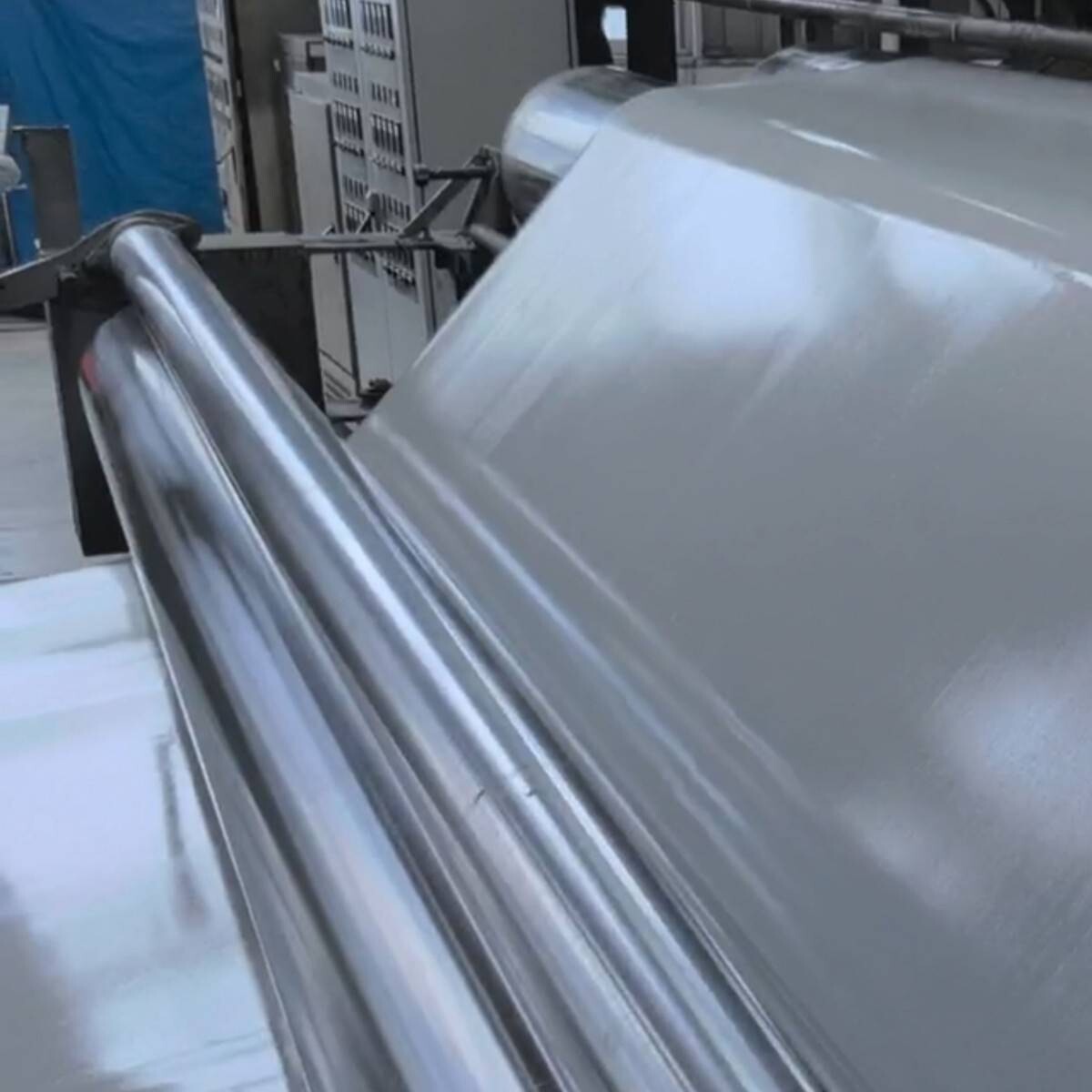
Shandong Lude New Material Co., Ltd. has successfully developed and launched the world’s first 12-meter ultra-wide HDPE geomembrane production line, marking a landmark achievement in China‘s geosynthetics manufacturing sector .
The new line represents a 50% increase over the traditional 8-meter specification. According to Liang Xunmei, a National People’s Congress representative and chairman of the company, this advancement compresses the weld seam length required for large reservoir installations to just 67% of the original requirement, fundamentally reducing leakage risk and shortening construction timelines .
The company overcame multiple bottleneck technologies including bubble control and online monitoring, while integrating intelligent systems such as spark detection and X-ray thickness measurement. The result is a product with thickness uniformity exceeding current international standards and significantly enhanced strength properties .
The 12-meter line achieves stable mass production at a maximum thickness of 3.0mm, with products already deployed across over a thousand national key projects in water conservancy, highway and railway reinforcement, tunnels, airports, ports, and environmental municipal engineering .
2. CECS Standard for TPO Geomembranes Initiated in China
On September 16, 2026, the first working meeting for the CECS (China Association for Engineering Construction Standardization) standard titled “Geosynthetics — Thermoplastic Polyolefin (TPO) Geomembranes” was held in Suzhou. The standard is jointly led by China Building Material Test & Certification Group Suzhou Co., Ltd. and China National Inspection and Testing Holding Group Co., Ltd. .
The initiative addresses a critical gap in China‘s standardization system. TPO geomembranes are increasingly used in water conservancy, hydropower, solid waste disposal, soil ecological remediation, and environmental anti-seepage applications. However, the absence of unified technical specifications for high-performance impermeable materials under complex working conditions has been recognized as an industry pain point .
Huang Jing, deputy director of the Waterproofing and Protection Committee of CECS, emphasized that the standard compilation must strictly maintain quality standards and avoid the proliferation of low-quality group standards. The standard aims to align with international advanced technical standards while establishing domestic benchmarks for product quality .
3. Layfield Awarded Major Garvey Reservoir Relining Contract
Layfield Geosynthetics was awarded a contract for the relining and installation of a geomembrane liner and floating cover system for the Metropolitan Water District of Southern California’s Garvey Reservoir .
With a capacity of approximately 523 million gallons (1.9 billion liters), the Garvey Reservoir is one of the largest municipal potable water reservoirs in the world to utilize a floating cover system. The project scope includes the installation of a double-lined 45 mil & 90 mil Reinforced HypaFlex® CSPE geomembrane system along with a tensioned CSPE trough floating cover .
Layfield will fabricate the geomembrane liners, floating cover panels, and numerous system components at its Lakeside, California manufacturing facility. The project is expected to take approximately two and a half years and will involve coordination among multiple contractors, agencies, and stakeholders .
4. Solmax Begins Construction of European Geosynthetics Center in France
Solmax has begun construction of its flagship European geosynthetics manufacturing site in Les Mureaux, France, near Paris, marking a significant step in the company‘s long-term investment in Europe .
The eight-hectare site will consolidate Solmax’s European nonwoven geotextile operations into a single modernized facility, designed to support the full breadth of geosynthetic applications. Production currently based in Linz, Austria, and Bezons, France, will be integrated into Les Mureaux .
The facility itself will also function as a real-world demonstration of geosynthetic engineering. Solmax solutions will be incorporated throughout the site‘s construction and infrastructure, illustrating how geosynthetics reinforce, stabilize, filter, and protect civil works in practice .
“Les Mureaux represents the next chapter in Solmax’s European manufacturing journey,” said Bob Gilligan, President and CEO of Solmax. The manufacturing center is scheduled to become operational by the end of the year .
5. Geomembrane Deployment at Bantargebang Landfill Marks Transition from Open Dumping
The DKI Jakarta Provincial Government has begun using geomembranes as part of the transformation of the Bantargebang Integrated Waste Processing Site (TPST) from open dumping to controlled landfill .
According to Dudi Gardesi, Head of the DKI Jakarta Environmental Agency, the geomembrane covering aims to reduce odor, control landfill gas emissions, suppress leachate formation, and reduce fire and landslide risks. The controlled landfill system will be implemented gradually starting August 1, 2026, with Zone 2 beginning to be covered since July 17, 2026 .
Professor Mochammad Chaerul from Bandung Institute of Technology noted that geomembrane represents a fairly effective mitigation step for reducing odor, greenhouse gas emissions, and leachate potential. However, he emphasized that geomembrane is not a single solution—it must be accompanied by methane gas management, leachate treatment, slope stability reinforcement, and waste volume reduction at the source .
6. HDPE Geomembrane Market Projected for Strong Growth Through 2035
According to a market analysis published by IndexBox in 2026, the HDPE geomembranes market is forecast to accelerate through 2035, driven by stricter containment regulations globally .
Key application segments include:
Water Management — High Growth Potential:
Rising investment in large-scale potable water storage reservoirs and canal linings, growth in covered anaerobic lagoons for biogas capture, expansion of desalination plants requiring durable liners for concentrate ponds, and adoption of geomembranes for aquifer storage and recovery (ASR) projects .
Civil Engineering and Tunnel Linings — Estimated 12% Share:
HDPE geomembranes are used for tunnel waterproofing, foundation barriers, and lining for canals and transportation corridors. Forecast growth is supported by global urbanization driving subway, railway, and road tunnel construction, especially in Asia and the Middle East .
Agriculture, Aquaculture, and Secondary Containment — Estimated 8% Share:
Demand is driven by efficient water use in agriculture, expansion of commercial fish farming, and tightening enforcement of secondary containment rules at industrial sites. Growth is steady and less susceptible to single-project volatility .
Key market participants include GSE Holding, Solmax, Agru America, NAUE GmbH & Co. KG, Atarfil, Plastika Kritis, JUTA, Carthage Mills, Firestone Building Products, and Sotrafa .
7. Chinese HDPE Anti-Seepage Geomembrane Market Sees Continued Expansion
According to a market research report covering the 2026-2032 period, China‘s HDPE anti-seepage geomembrane market continues to expand, driven by environmental infrastructure and water conservancy investments .
Major manufacturers operating in the Chinese market include Solmax, AGRU, JUTA, Carlisle Companies, Sotrafa, Maccaferri, Atarfil, Layfield Group, Naylor Industries Plc, Shandong Xintianhe Plastic Co., and Shandong Hongxiang New Materials Co. Product types analyzed include flat extrusion and blown film processes, with applications spanning agriculture, municipal construction, petrochemicals, landscaping, and others .
8. Conclusion
The geomembrane industry in 2026 is characterized by significant technological advancement, evolving standards, and expanding global applications. Key themes include:
Manufacturing innovation enabling wider, stronger, and more uniform products
Standardization efforts to ensure quality and performance consistency
Major infrastructure projects driving demand for high-performance containment
Market growth supported by stricter environmental regulations worldwide
As global infrastructure investment continues and environmental compliance requirements tighten, geomembranes will remain essential components of responsible containment and water management strategies. The industry‘s trajectory suggests continued innovation in materials, manufacturing, and application technologies throughout the coming decade.
Inquiry about this product
Related Recommendations
If there is no accurate search result, please contact us and we will respond within 24 hours.