


2026 Geomembrane Industry News Roundup: Innovation, Standards, and Market Growth
Abstract
The geomembrane industry has seen significant developments in 2026, spanning technological breakthroughs in manufacturing, evolving regulatory standards, and expanding market applications. This news summary covers the latest achievements in production technology, new research on material performance, emerging market trends, and key industry events shaping the future of geomembrane solutions worldwide.
1. Chinese Manufacturer Achieves World-First 12-Meter Ultra-Wide HDPE Geomembrane Production
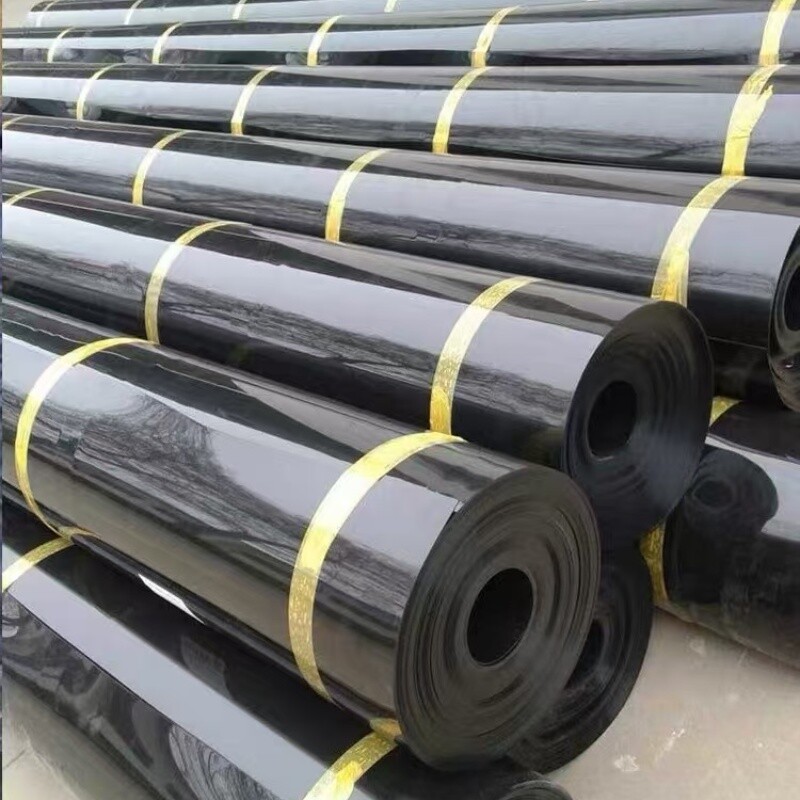
In a major breakthrough for the global geomembrane industry, Shandong Lude New Material Co., Ltd. has successfully developed and launched the world's first 12-meter ultra-wide HDPE geomembrane production line. This represents a 50% increase over the traditional 8-meter specification and is described as a landmark achievement in China's geosynthetics manufacturing sector .
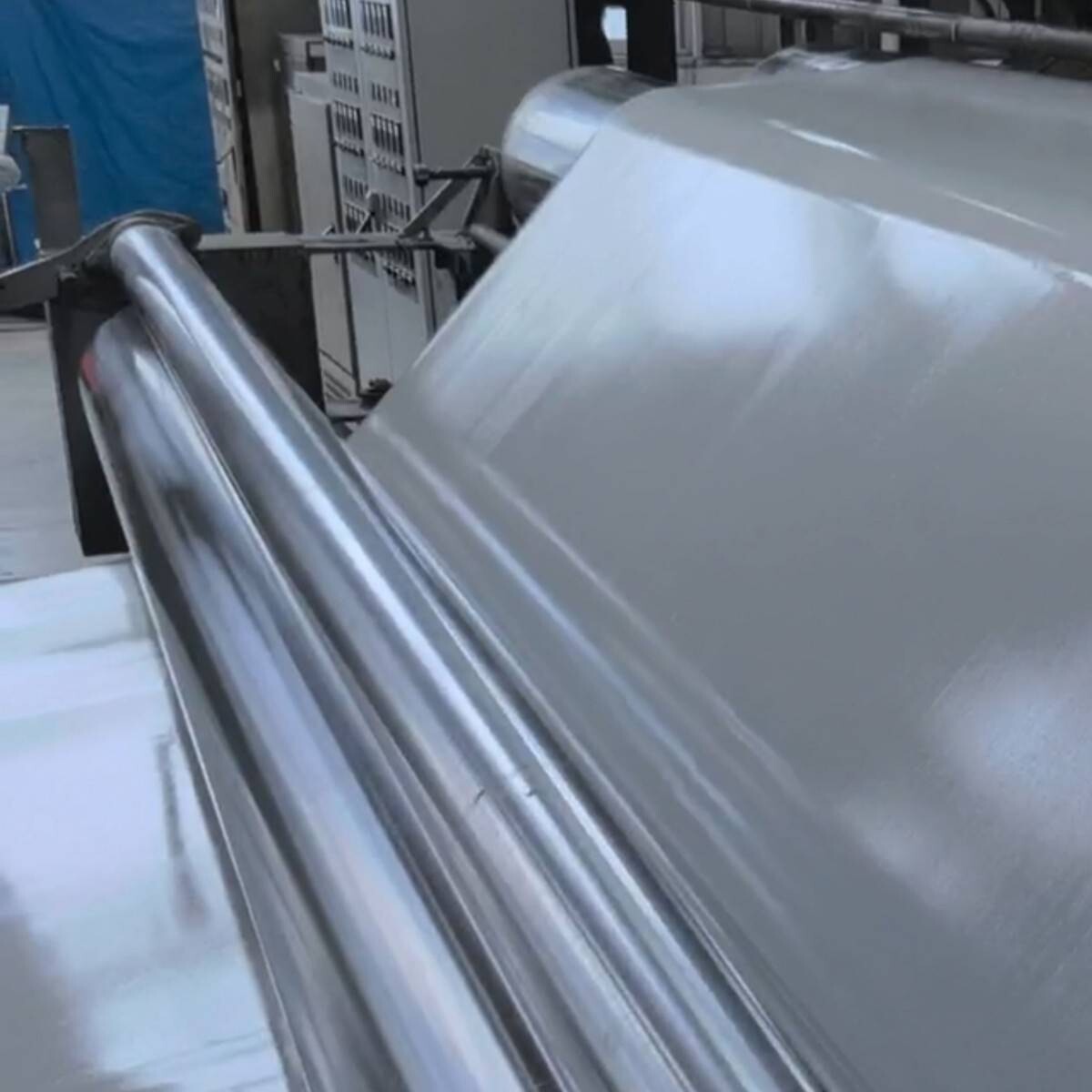
The new production line compresses the weld seam length required for large reservoir installations to just 67% of the original requirement, fundamentally reducing leakage risk and shortening construction timelines. The company overcame multiple "bottleneck" technologies including bubble control and online monitoring, while integrating intelligent systems such as spark detection and X-ray thickness measurement. The result is a product with thickness uniformity exceeding current international standards and significantly enhanced strength properties .
The 12-meter line achieves stable mass production at a maximum thickness of 3.0mm, with products already deployed across over a thousand national key projects in water conservancy, highway and railway reinforcement, tunnels, airports, ports, and environmental municipal engineering .
2. New CECS Standard for TPO Geomembranes Initiated in China
On September 16, 2026, the first working meeting for the CECS (China Association for Engineering Construction Standardization) standard titled "Geosynthetics — Thermoplastic Polyolefin (TPO) Geomembranes" was held in Suzhou. The standard is jointly led by China Building Material Test & Certification Group Suzhou Co., Ltd. and China National Inspection and Testing Holding Group Co., Ltd. .
The initiative addresses a critical gap in China's standardization system. TPO geomembranes are increasingly used in water conservancy, hydropower, solid waste disposal, soil ecological remediation, and environmental anti-seepage applications. However, the absence of unified technical specifications for high-performance impermeable materials under complex working conditions has been recognized as an industry pain point .
The standard aims to align with international advanced technical standards while establishing domestic benchmarks for product quality. Experts at the meeting emphasized the importance of maintaining rigorous quality control to avoid the proliferation of low-quality group standards. The compilation work is now formally underway, with participation invited from research institutes, manufacturers, engineering application units, and third-party testing organizations .
3. Self-Healing Geomembrane Market Projected to Exceed $3.1 Billion by 2035
According to a new market analysis published in August 2026, the self-healing waterproofing geomembrane market is projected to surpass $3.1 billion by 2035, driven by infrastructure renewal and increasingly stringent environmental regulations .
Self-healing geomembranes offer significant advantages by automatically sealing punctures and damage, reducing leak detection and remediation frequency. Key application segments include:
Mining (Heap Leach Pads, Tailings Storage) — 14% estimated share:
The mining sector is a major consumer, requiring liners that withstand harsh chemicals, heavy loads, and puncture risks from sharp rocks. Self-healing properties are critical to preventing leachate loss and environmental contamination. This segment is expected to grow at a CAGR of 10.8%, driven by stricter tailings management regulations and the expansion of copper and gold mining in Latin America, Africa, and Australia .
Waste Management (Landfills, Capping, Ponds) — 7% estimated share:
Self-healing liners are particularly effective in landfill caps where settlement and differential movement cause punctures. The segment is driven by compliance requirements in Europe and North America, with a projected CAGR of 9.5% .
Formulation and Compounding — 3% estimated share:
Custom-blended self-healing geomembranes for niche applications such as oil sands, geothermal projects, and aggressive chemical exposure are expected to grow at a CAGR of 11.5%
4. New Research Advances Understanding of Geomembrane Performance in Thermal Energy Storage
A groundbreaking study published in Geotextiles and Geomembranes in 2026 has extended the analysis of water vapor transport through geomembranes beyond the conventional Fickian diffusion framework. The research, focused on pit thermal energy storage (PTES) liner applications, introduces a Stefan-based multicomponent diffusion model that accounts for coupled diffusion-convection interactions .
The study evaluated five commercially available geomembranes, including HDPE and Ethylene Interpolymer Alloy (EIA) PVC materials. The thermally resistant HDPE exhibited the highest tensile strength at 24.8 kN/m, attributed to its more pronounced semi-crystalline structure with 51.4% crystallinity .
This research addresses a critical knowledge gap for thermal energy storage systems, which typically operate at temperatures up to 90°C and require continuous operation for several decades. Conventional testing standards based on ambient temperature conditions have been shown to inadequately capture vapor transmission behavior under elevated temperatures and pressure gradients .
5. Geomembranes Market Projected to Reach $5.20 Billion by 2031
A comprehensive market report released in July 2026 projects the global geomembranes market to reach $5.20 billion by 2031, with mining estimated to be the largest application segment .
The mining sector's dominance is driven by the need for high-performance barrier systems in tailings storage facilities, heap leach pads, process ponds, and solution channels. As global exploration and production of critical minerals including copper, lithium, gold, and nickel increases, demand for advanced containment systems continues to rise .
Asia Pacific is projected to be the fastest-growing regional market, fueled by increasing construction activities, investment in water infrastructure, and industrial development. Countries such as China, India, Indonesia, and Australia are investing heavily in reservoirs, canals, wastewater treatment plants, and transportation infrastructure .
Key players in the geomembranes industry include Solmax (Canada), AGRU America Inc. (US), Naue GmbH & Co. KG (Germany), Atarfil Geomembranas (Spain), Carlisle Construction Materials (US), and Officine Maccaferri SpA (Italy), among others .
6. Industry Events and Webinars Address Cold Region Performance
The Flexible Geomembrane Institute hosted a free webinar on July 9, 2026, addressing the puncture performance of geomembranes in cold regions. The webinar highlighted a critical issue: most testing and property determinations are conducted at above-freezing temperatures, potentially resulting in incorrect design applications for geomembranes used in cold climates .
This research seeks to develop a new testing method capable of capturing temperature effects on geomembrane puncture resistance, addressing a significant gap in current design practices.
Additionally, the 2026 SPE International Polyolefins Conference featured a technical session on advancing UV and chemical resistance in geomembranes. The presentation discussed the introduction of new industry standard GRI-GM42 and increasingly stringent environmental regulations driving the need for advanced UV stabilization technologies .
7. New Manufacturing Capacity Announced in China
Shandong Hengyang New Materials Co., Ltd. has commissioned a new 4,000-ton-per-year high-speed nonwoven geotextile production facility and announced plans for additional capacity expansion. The company is also launching an 8,000-ton polyester filament geotextile line and a 7,000-ton 8-meter-wide geomembrane flat-die production line .
These investments reflect the continued expansion of China's geosynthetics manufacturing base and the industry's focus on moving toward higher-end product segments with enhanced technical specifications.
8. Layfield Awarded Major Reservoir Lining Contract
Layfield Geosynthetics was awarded a contract for the relining and installation of a geomembrane liner and floating cover system for the Metropolitan Water District of Southern California's Garvey Reservoir. With a capacity of approximately 523 million gallons (1.9 billion liters), the Garvey Reservoir is one of the largest municipal potable water reservoirs in the world to utilize such a system .
9. Research Highlights on Antioxidant Depletion and Aging
Several peer-reviewed studies published in 2026 have advanced understanding of geomembrane aging mechanisms:
Antioxidant Depletion in Tensioned HDPE Geomembranes:
Research published in the Journal of Geotechnical and Geoenvironmental Engineering investigated how tensile strain affects antioxidant depletion in HDPE geomembranes exposed to synthetic municipal solid waste leachate. The findings indicate that antioxidant depletion under strain may compromise long-term performance in waste containment facilities .
Coextruded EVOH Geomembranes:
A study published in the same journal evaluated two coextruded EVOH geomembranes exposed to synthetic MSW leachate at temperatures ranging from 22°C to 85°C. Results showed that with appropriate surface-layer formulations, coextruded EVOH geomembranes can serve as promising alternatives to traditional HDPE geomembranes, with longer oxidative induction time depletion periods at higher temperatures .
Thermal Aging in Seasonal Thermal Energy Storage:
Research on impermeable geomembranes for seasonal thermal energy storage water pits highlighted that long-term high-temperature environments accelerate aging of HDPE membranes, leading to potential failure of seepage control functions. The study emphasized the need to consider combined temperature and time effects in design .
10. Conclusion
The geomembrane industry in 2026 is characterized by significant technological advancement, evolving standards, and expanding applications. Key themes include:
Manufacturing innovation enabling wider, stronger, and more uniform products
Standardization efforts to ensure quality and performance consistency
Market growth driven by mining, water infrastructure, and environmental protection
Advanced research improving understanding of long-term performance under challenging conditions
Emerging technologies such as self-healing liners offering enhanced reliability
As global infrastructure investment continues and environmental regulations tighten, geomembranes will remain essential components of responsible containment and water management strategies. The industry's trajectory suggests continued innovation in materials, manufacturing, and application technologies throughout the coming decade.
Inquiry about this product
Related Recommendations
If there is no accurate search result, please contact us and we will respond within 24 hours.